ABA Therapy for Parents: Why Caregiver Training Is Part of the Plan
QUICK TAKEAWAY Primary Insight: ABA therapy for parents means learning the same strategies your child’s BCBA has built into their

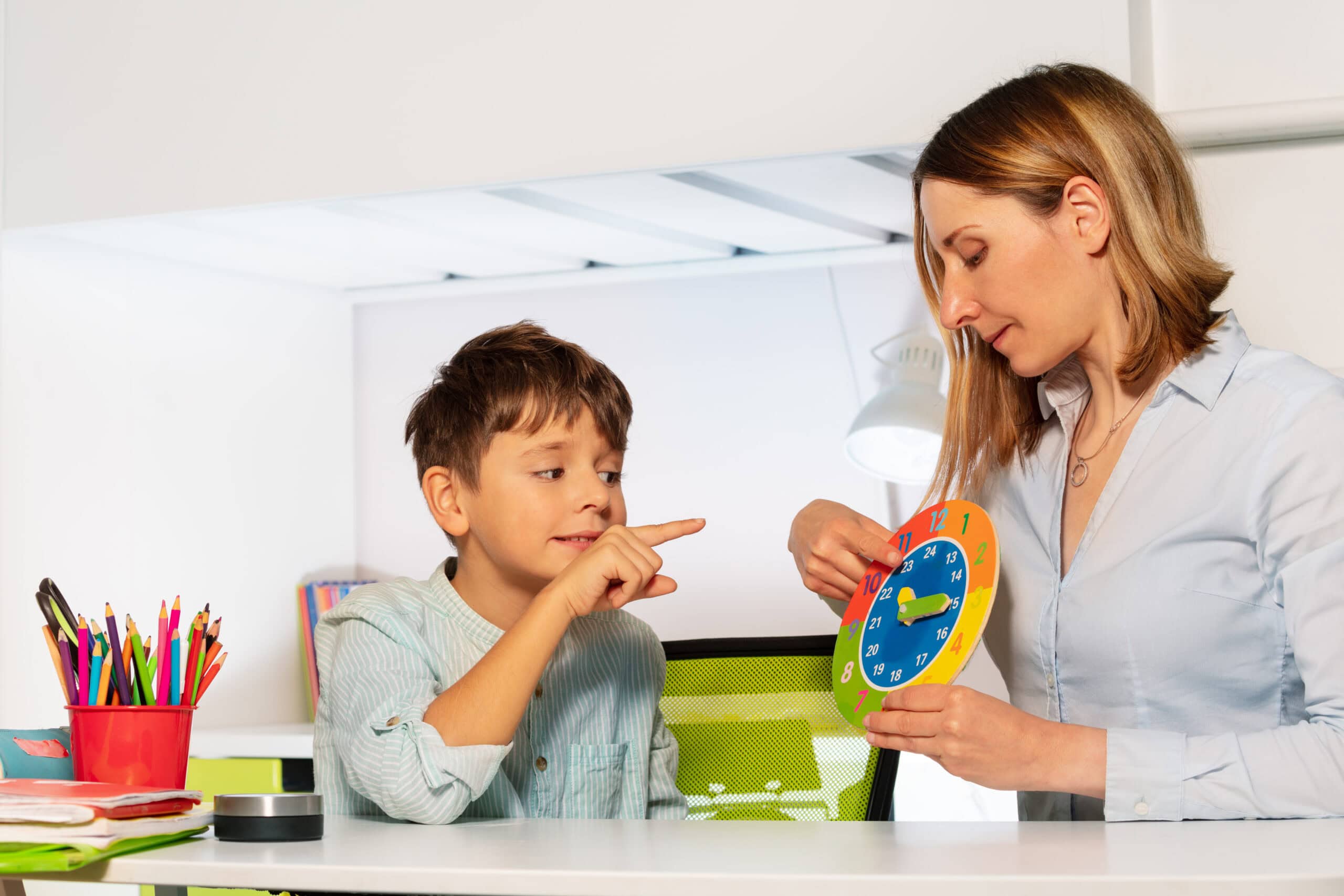
A child who cannot ask for help may cry, hit, drop to the floor, or shut down instead. A child who wants friends may still struggle to join a game, wait for a turn, or read another child’s cues. These are the kinds of everyday problems ABA therapy is built to address.
Applied Behavior Analysis addresses everyday skills that support communication, independence, learning, and social connection. ABA-based interventions can improve language, adaptive skills, and social functioning in children with developmental needs, including autism.
This guide explains what children learn in ABA therapy, how those skills are taught, and how they apply at home, in school, and in the community.
ABA therapy focuses on skill-building across multiple areas of development. The goal is to help children function more independently and interact meaningfully with others. Children in ABA programs often work on:
These are known as adaptive skills. They directly impact how a child navigates daily life. ABA uses structured teaching, repetition, and reinforcement to help children learn these skills step by step.
ABA often starts with the skills that open the door to everything else. For one child, that may be learning to request a snack, a break, or a favorite toy. For another, it may be sitting for short tasks, following one-step directions, or transitioning between activities with less stress. These early goals matter because they support learning across home, school, and community routines.
Therapists do not choose goals at random. They look at what the child can do now, what gets in the way, and what would make the biggest difference in daily life. That is why ABA may focus on communication for one child and independence skills for another. The purpose is practical progress, not teaching isolated tasks that do not carry over to real life.
Communication is one of the most common areas parents ask about, and for good reason. When children can express their wants, needs, feelings, and choices more clearly, daily life often becomes calmer and more predictable.
ABA therapy for speech delay may include teaching requests, labels, simple conversation, listener skills, and the use of gestures, pictures, or devices when spoken language is limited. Communication goals can involve both verbal and nonverbal communication in ABA programs.
A strong ABA program does not treat communication as memorizing words. It teaches children how communication works in real situations. A child may learn to ask for help instead of crying, answer questions during play, or tell an adult that something feels too loud. This is one reason parents often search for how ABA improves communication skills. The improvement comes from repeated teaching, reinforcement, and practice in meaningful settings.
Functional communication training in ABA is especially important when problem behaviors are linked to unmet needs. If a child learns to say, sign, point, or use a device to ask for a break, attention, or a preferred item, the need to hit, scream, or drop to the floor may decrease. That is not guesswork. Strengthening communication and social skills often helps decrease concerning behaviors.
ABA therapy for social skills development focuses on behaviors that help children connect with other people. That may include greeting others, sharing materials, taking turns, joining group play, noticing facial expressions, staying on topic, and handling winning or losing. Social skills training for autism often relies on repetition, modeling, practice, and reinforcement because these skills do not always develop naturally for every child.
Teaching social interaction with ABA is not about forcing a child to act like everyone else. It is about helping the child participate more successfully in situations that matter to them. A child who wants friends may need support with starting conversations, inviting peers to play, or reading when another child wants space. ABA therapy for making friends can also include group practice, peer play, and coached social routines.
Play is a major part of this work. Play skills in ABA therapy can include imitation, pretend play, turn-taking, flexible play, and cooperative games. Play provides children with natural opportunities to practice language, problem-solving, and social connection.
Some of the most meaningful progress in ABA happens outside formal teaching moments. ABA therapy for daily living skills helps children learn the routines that make family life smoother and prepare them for greater independence. That can include toileting, dressing, brushing teeth, washing hands, feeding, cleaning up, packing a backpack, and following a morning routine.
A child may learn to pull up pants after using the toilet, put dishes in the sink, or complete bedtime steps with fewer prompts. Over time, these small gains add up. Independence skills in ABA are taught by breaking tasks into manageable parts, practicing them often, and fading support as the child succeeds.
Life skills taught in ABA therapy can also expand with age. Older children and teens may work on organization, safety skills, simple chores, community routines, and readiness for more independent living.
ABA therapy for behavior management is not just about stopping behaviors that adults do not like. Good ABA starts by asking what the behavior is doing for the child. Is the child trying to escape a hard task, gain attention, get access to something, or communicate discomfort? Once the function is understood, the plan teaches a better replacement skill.
That is why reducing problem behaviors with ABA is most effective when skill-building is part of the plan. If a child tantrums during transitions, the solution may involve visual supports, practice with waiting, and a way to ask for more time. If aggression happens during communication breakdowns, treatment may focus on functional communication training. Emotional regulation in ABA therapy can include waiting, coping with “no,” asking for a break, and using calming routines with support.
Parents searching for ABA therapy for tantrums and aggression usually want relief, but they also want to understand why the behavior keeps happening. ABA helps by connecting behavior to context and then teaching safer, more useful ways to respond.
ABA therapy for learning and academics often begins with the building blocks that make school possible. A child may need to learn how to sit for instruction, attend to a teacher, shift between tasks, follow a group direction, or tolerate short periods of waiting. Attention and focus skills in ABA can support classroom participation and enhance how much a child learns from instruction.
ABA therapy for school readiness may also target pre-academic and classroom routines such as matching, sorting, responding to a name, circle time participation, and independent work habits. Problem-solving skills in ABA therapy can show up in both academic and daily tasks, such as trying a second strategy, asking for help, or finishing a task after a small change in routine.
This matters because many school struggles are not only academic. A child may know the material but still have trouble with peer interaction, attention, transitions, or coping when something changes. ABA can support those areas so learning becomes more accessible.
In schools, ABA strategies can help children improve focus, follow routines, interact with classmates, and manage behavior during instruction. Classroom support may include behavior plans, environmental changes, clear reinforcement systems, visual supports, direct skill teaching, and coaching for staff to ensure strategies remain consistent throughout the day.
We focus on the skills that make the biggest difference in real life. Our team works across home, school, and community settings because children do better when support is connected. That may mean helping a child communicate needs more clearly, build play and friendship skills, manage frustration with safer responses, or gain self-help skills that reduce stress for the whole family. We also support educators through classroom consultation and professional development, so progress is not limited to a single setting.
We also know that families want care that feels respectful and practical, which is why we focus on compassionate, individualized, trauma-informed, and collaborative services. We do not present support as one-size-fits-all. We build goals around the child, the family, and the routines that matter most.
Progress in ABA is not measured by how many targets appear on a program sheet. It shows up in the moments families feel every day. A child asks for help instead of melting down. A morning routine takes less time. A class transition goes more smoothly. A playdate lasts longer. Those changes can shift the tone of home and school life in a real way.
That is why the next step is not searching for a long list of therapy terms. It is finding a team that can connect goals to daily life and teach skills in a way your child can actually use. If you are trying to understand what ABA therapy can help your child learn, the right program teaches useful skills that fit your child’s needs and carry into real routines. That is the standard we believe in at Education Behavior Consultants.
If your family or school needs support with communication, social skills, daily living, behavior, or school readiness, contact us today.
Can ABA therapy help children who are not speaking yet?
Yes. ABA can support children who are not speaking by teaching functional ways to communicate first. That may include gestures, signs, picture systems, or speech-generating devices, along with early spoken language when appropriate. The goal is to help the child communicate needs, choices, and feelings in a way that works for them.
How long does it usually take to see progress in ABA therapy?
Progress looks different for every child because goals, support needs, therapy hours, and consistency vary. Some children show early gains in routines, communication, or transitions within a short period, while more complex goals take longer. A well-run ABA program tracks data over time so families can see what is improving and where changes to the plan are needed.
Is ABA therapy only for children with autism?
ABA is most often discussed in relation to autism, but the science of behavior analysis is broader than one diagnosis. In practice, many providers use ABA-based strategies to teach socially significant skills and reduce behaviors that interfere with learning or daily life. Still, families should look for a provider whose services match the child’s actual needs, not just a diagnosis label.
What is the difference between ABA therapy and speech therapy?
ABA and speech therapy can overlap in communication goals, but they are not the same service. Speech therapy focuses on speech, language, and social communication from the perspective of a speech-language pathologist. ABA focuses on learning and behavior more broadly, including communication, daily routines, social behavior, and replacement skills. Many children benefit when these services work together.
Can parents use ABA strategies at home even when therapy sessions are over?
Yes. Parent and caregiver involvement is often one of the strongest parts of a good ABA program. Families can learn how to reinforce communication, support routines, respond more consistently to challenging behavior, and help children practice skills across daily activities. This is often what helps progress carry over beyond therapy sessions.
QUICK TAKEAWAY Primary Insight: ABA therapy for parents means learning the same strategies your child’s BCBA has built into their
QUICK TAKEAWAY Primary Insight: Applied behavior analysis for adults targets independent-living, vocational, and social skills rather than early-childhood milestones, and
QUICK TAKEAWAY Primary Insight: An RBT delivers your child’s day-to-day ABA sessions, and a BCBA designs and directs the treatment
At Education Behavior Consultants, our work has always been about more than delivering services — it’s about showing up for
Parents often hear a wide range of recommendations for ABA therapy, from just a few hours a week to full-time
A child who cannot ask for help may cry, hit, drop to the floor, or shut down instead. A child